Papers ← Contents · Braided ← Chapter A0
Paper A0 — Modeling Reality as a Gelfand Triple: Two Complementary Projections of Complete Structure
The Gelfand triple Φ ⊂ H ⊂ Φ′ — a nuclear space of maximum structure, a self-dual Hilbert space of complete states, and a distributional dual of excess potential — and the five actualities the inner product’s own structure forces: the fundamental relation, the nuclear structure, the metric absolute, the nuclear topology, and the realized nuclear space. The inner product ⟨·,·⟩, invariant across all three domains, is the foundational object the standard formalism leaves implicit.
Confidence — Math: derivation — the five actualities forced by the inner product’s own structure (§5.6); the Gelfand triple Φ ⊂ H ⊂ Φ′; one named input, the assumption that reality can be modeled as a Gelfand triple rigged by its own observables (§5.6). Science: — (not engaged). Theology: — (not engaged) — the identifications are made in Paper A1, not here. For per-result ground, support and exposure, see the Traceable Account at the foot.
Abstract
Modeling reality as a rigged Hilbert space — the Gelfand triple Φ ⊂ H ⊂ Φ′ — reveals two complementary and complete projections of the structure of any inner-product-based model of reality. The first projection identifies three inevitable domains: a nuclear space Φ of maximum structure, a self-dual Hilbert space H of complete structured states, and a distributional dual Φ′ of excess potential. The second projection identifies five inevitable actualities that emerge from the inner product’s own structure: the fundamental relation, the nuclear structure, the metric absolute, the nuclear topology, and the realized nuclear space. Both projections are shown to be necessary consequences of the mathematics, without further assumptions beyond the one declared. And the inner product ⟨·,·⟩ — invariant across all three domains — occupies a foundational position that the standard Hilbert space formalism does not make explicit. A structural consequence of the second projection is that the active coordinative structure (the nuclear topology) proceeds necessarily from both the fundamental relation and the nuclear structure jointly — neither alone suffices. The question of the observing subject is explicitly deferred.
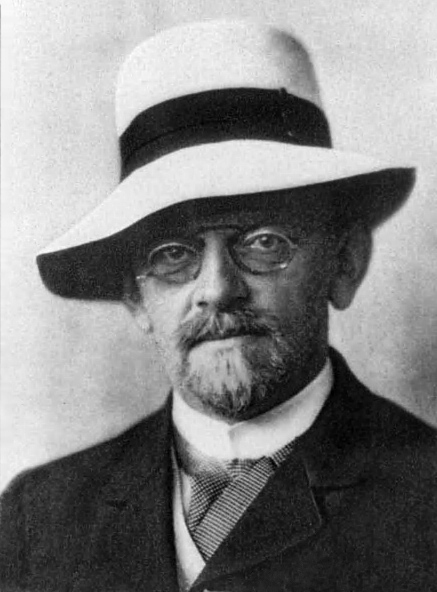
“The infinite! No other question has ever moved so profoundly the spirit of man; no other idea has so fruitfully stimulated his intellect; yet no other concept stands in greater need of clarification than that of the infinite.” — David Hilbert, “On the Infinite” (1926)
1. Introduction
The standard mathematical framework for quantum mechanics models the state space of a physical system as a complex separable Hilbert space H. This choice reflects a series of desiderata: linear superposition of states, an inner product defining probabilities and transition amplitudes, and completeness ensuring that all Cauchy sequences converge. The Hilbert space formalism has proven extraordinarily productive.
It is nevertheless incomplete. The eigenstates of continuous-spectrum observables — position, momentum, energy in scattering states — are not elements of H. The position eigenstate δ(x − x₀), the Dirac delta function, is not a square-integrable function and cannot be normalized as an element of L²(ℝ). Dirac’s bra-ket notation handles this intuitively, treating |x⟩ and |p⟩ as formal eigenstates, but this intuition exceeds the formal structure of H alone.
The resolution is the rigged Hilbert space, or Gelfand triple: a triplet of spaces Φ ⊂ H ⊂ Φ′ in which Φ is a dense nuclear subspace of H and Φ′ is its distributional dual. This is the framework in which Dirac’s bra-ket formalism is rigorously justified (Gelfand and Vilenkin, 1964; Maurin, 1968). It is not a supplement to H — it is the correct mathematical framework for quantum mechanics, of which the bare Hilbert space H is a central but incomplete component.
Two claims are connected here. The Gelfand triple structure is not arbitrary but inevitable: given any model of reality founded on inner product structure, the three domains Φ, H, and Φ′ are forced by the mathematics. And the inner product ⟨·,·⟩ itself — prior to its completion into the triple — inevitably generates five distinct structural actualities, each following necessarily from what the inner product is. The relationship between the two projections is §7’s.
One assumption stands behind all of it: that reality can be modeled as a Gelfand triple. Nothing further is assumed, though the assumption is not empty: what it commits to about reality’s own observables is set out in §5.6. The operator chain that generates Φ is built from the inner product — an operator is self-adjoint only with respect to it — and which chain is in force is fixed by the assumption already made. Given the inner product, everything else is derived. The structures demonstrated here exist without names — they are mathematical objects whose identities are established by the mathematics alone. The account stops where the mathematics can take us no further.
2. Mathematical Preliminaries
2.1 Inner Product Spaces and Hilbert Spaces
A Hilbert space H is a complete inner product space over the complex numbers. The inner product ⟨·,·⟩: H × H → ℂ satisfies conjugate symmetry, linearity in the second argument, and positive definiteness (⟨ψ, ψ⟩ > 0 for ψ ≠ 0). Completeness means that every Cauchy sequence in H converges to an element of H. The inner product determines a norm ‖ψ‖ = √⟨ψ, ψ⟩, and two elements ψ, φ ∈ H are orthogonal if ⟨ψ, φ⟩ = 0.
A countable orthonormal basis {eₙ} satisfies ⟨eₘ, eₙ⟩ = δₘₙ (Kronecker delta) and spans H in the sense that every ψ ∈ H can be written ψ = Σₙ ⟨eₙ, ψ⟩ eₙ. The Kronecker delta expresses orthogonality: distinct basis elements have zero inner product, encoding the mutual distinctness of basis states as a structural fact inscribed in the space itself.
2.2 Self-Duality and the Riesz Representation Theorem
A fundamental property distinguishes Hilbert spaces from other topological vector spaces. The dual space H* — the space of continuous linear functionals H → ℂ — stands in isometric, one-to-one correspondence with H itself. By the Riesz representation theorem, every continuous linear functional F on H takes the form F(ψ) = ⟨φ, ψ⟩ for a unique φ ∈ H (Reed and Simon, 1972), and ‖F‖ = ‖φ‖. Over ℂ the correspondence φ ↦ ⟨φ, ·⟩ is conjugate-linear, since ⟨·,·⟩ is conjugate-linear in its first argument (§2.1): H is isometrically anti-isomorphic to H*, and H* is isometrically isomorphic to the conjugate space H̄. What the argument below uses is the exactness of the correspondence — every functional is a vector and every vector a functional, with the norm carried across. Notation: this paper writes H ≅ H* throughout as the customary shorthand for that correspondence.
This self-duality is a special property of Hilbert spaces. It does not hold in Φ or Φ′: Φ* = Φ′ (larger than Φ) and (Φ′)* = Φ (smaller than Φ′). H is the unique layer at which the dual folds back onto the space itself — the only domain within the triple that is self-referential in this precise mathematical sense.
2.3 Nuclear Spaces
A nuclear space is a locally convex topological vector space characterized by infinite differentiability and a system of seminorms under which it embeds compactly into Hilbert spaces of all orders. The canonical example is the Schwartz space S(ℝⁿ) of rapidly decreasing smooth functions, which embeds densely into L²(ℝⁿ) and has as its distributional dual the space S′(ℝⁿ) of tempered distributions (Schwartz, 1950–51).
Nuclear spaces have a projective limit representation: Φ = ⋂ₖ Hₖ where H = H₁ ⊃ H₂ ⊃ H₃ ⊃ … is a chain of Hilbert spaces whose inclusions are Hilbert–Schmidt cofinally — for each k there is some m > k with Hₘ ↪ Hₖ Hilbert–Schmidt. This is the countably-Hilbert construction of Gelfand and Vilenkin (1964). The chain is generated by a fixed self-adjoint operator: for S(ℝⁿ) the operator is the harmonic-oscillator Hamiltonian −Δ + |x|², and each Hₖ is the completion of Φ under the weighted norm ‖φ‖ₖ = ‖(−Δ + |x|² + 1)ᵏ⁻¹φ‖. Plain Sobolev norms will not do — their intersection is the larger space H^∞(ℝⁿ), and their inclusions are not Hilbert–Schmidt; the weight |x|² is what makes the intersection exactly S(ℝⁿ). Φ is the intersection of all the Hₖ — the domain on which every level of analytical resolution is simultaneously well-defined.
2.4 Distributional Spaces
The distributional dual Φ′ consists of continuous linear functionals on Φ. It contains Φ and H as proper subsets (via H ≅ H* ↪ Φ′). Its elements include the Dirac delta distribution δ(x − x₀) — pure localization at a point with infinite intensity, not a square-integrable function — and white noise, a stochastic process with infinite variance that cannot be a point of H. These objects have precise mathematical structure that exceeds what H can contain (Gelfand and Vilenkin, 1964).
3. The Gelfand Triple: Construction and Invariance
The rigged Hilbert space (Gelfand triple) is a triplet of spaces
Φ ⊂ H ⊂ Φ′
where the inclusions are continuous and dense. Φ is a nuclear space densely embedded in H, and Φ′ is the strong dual of Φ. The inner product of H extends to a bilinear duality pairing ⟨·,·⟩: Φ × Φ′ → ℂ that generalizes the inner product while allowing distributional elements on one side.
3.1 Three Topologies, One Algebraic Structure
Φ, H, and Φ′ are not three separate mathematical objects. They are three topological completions of the same underlying algebraic structure — the same pre-Hilbert space, completed or restricted under three different systems of seminorms.
- Φ carries the projective limit topology from the weighted operator chain: the finest topology, requiring convergence in all the weighted norms ‖·‖ₖ simultaneously.
- H carries the Hilbert space topology: convergence in the single inner product norm.
- Φ′ carries the weak* topology: convergence of distributional functionals on Φ.
The same underlying algebraic object is carried from maximum to moderate to minimum regularity — the demand made of an element.
3.2 The Inner Product as Invariant
The inner product ⟨·,·⟩ is defined on H but is invariant in the following sense: the bilinear pairing that measures the angle between states does not change as one moves between domains. On Φ × Φ it coincides with the H inner product. On Φ × Φ′ it is the distributional duality pairing, extending the H inner product by continuity. The relational structure — the measure of how much any two states overlap — is the same operation across all three topological regimes.
The topology can change; the inner product does not. The inner product constitutes all three domains without being reducible to any one of them.
3.3 The Generalized Nuclear Spectral Theorem (GNST)
Every self-adjoint operator A on H, when its domain is taken within Φ, has a complete set of generalized eigenvectors in Φ′. There exist eλ ∈ Φ′ satisfying A†eλ = λeλ in the distributional sense, and any ψ ∈ H admits the spectral expansion (Gelfand and Vilenkin, 1964; Maurin, 1968):
ψ = ∫ ⟨eλ, ψ⟩ eλ dμ(λ)
where dμ is the spectral measure on the spectrum of A. The position eigenstates |x⟩ = δ(x − x₀) are exactly the distributional eigenvectors of the position operator, living in Φ′ rather than H. This is the mechanism by which the triple produces specific, finite outcomes from the infinite structure of the state space: the spectral measure dμ coordinates the H-state ψ and the Φ′-eigenstates eλ jointly into a finite result. This result — the central consequence the Gelfand triple makes possible — is named the Generalized Nuclear Spectral Theorem (GNST). As stated here it is a theorem — timeless, belonging with the rest of A0 to the eternal structure: how any self-adjoint operator resolves. Its operative reading — the GNST as the standing, successive engine by which the world is actualized in time, event by event — belongs to the cascade and the birth of time (A3A), not to A0’s eternity; it is the GNST so understood to which the rest of the Framework refers.
4. First Projection: The Three Inevitable Domains
The Gelfand triple produces exactly three qualitatively distinct domains — three being the minimum necessary, and the three differing in kind.
4.1 The Necessity of All Three
H alone is insufficient. The eigenstates of position and momentum are not in H; a model founded on H alone cannot represent localized events. The extension to Φ′ is what contains the missing eigenstates. But Φ′ alone, without a dense nuclear subspace Φ, leaves the operator domain undefined — operators like the Hamiltonian, position, and momentum require a domain with additional regularity on which they are everywhere defined and self-adjoint.
All three are therefore required: H as the domain of well-defined quantum states, Φ′ as the domain of distributional eigenstates, and Φ as the domain of maximum regularity on which operators are defined. Remove any one and the model cannot represent the physics it is built to describe.
4.2 Qualitative Distinctness
The three domains are not merely quantitative gradations. They are qualitatively different:
Φ (Nuclear space): Maximum structure. Self-consistent under every operator probe at every scale. The projective limit of the weighted operator chain. The domain within which every question the operator algebra can formulate has a well-defined answer, consistently, completely, at every level.
H (Hilbert space): Complete, self-dual structure. H ≅ H* by the Riesz theorem — the unique layer at which the dual folds back onto the space itself. The domain of well-defined quantum states and probability amplitudes. Self-referential in a precise mathematical sense: every continuous functional on H is already in H.
Φ′ (Distributional dual): Excess potential. Contains all of H and more — elements too singular to reside in H. The domain of distributional structure: localization without spread, potential without structured form. Not the absence of structure — Φ′ has its own precise mathematical structure — but the excess of potential beyond what structured completeness can contain.
H’s self-duality is unique among the three. Φ’s dual is Φ′ (larger); Φ′‘s dual is Φ (smaller). Only H folds back on itself. This structural singularity distinguishes H categorically from the other two domains.
4.3 The Unity of the Three
The three domains are the same underlying algebraic structure viewed under three different topologies. The inner product ⟨·,·⟩, invariant under topology change, is the single structure constituting all three. It is not an element of any domain. It is the fundamental relation that all three domains presuppose.
The three domains are projections of the inner product — not the other way around.
5. Second Projection: The Five Inevitable Actualities
The inner product ⟨·,·⟩, prior to and apart from its completion into the full Gelfand triple, generates five inevitable structural actualities.
These five are not the Three Domains seen differently. They describe what necessarily exists within and at the source of the nuclear domain Φ — the inner life of the structure from which the triple derives.
5.1 The Fundamental Relation (I)
The inner product ⟨·,·⟩ itself. Not an element of any space, not derivable from anything prior — it is the primal constitutive structure from which all else in the model follows. Every other actuality in this section is a necessary consequence of what the inner product is.
5.2 The Nuclear Structure (II)
The inner product, when applied iteratively through the powers of the given generating operator — for S(ℝⁿ), the harmonic-oscillator Hamiltonian −Δ + |x|² — generates a maximal domain of regularity: the nuclear space Φ considered as an algebraic and set-theoretic object — the Pattern, the set of all functions for which every weighted norm ‖φ‖ₖ is finite. This is the maximally structured expression of the inner product’s logic: the domain on which the inner product is self-consistent under every probe, at every scale.
This is the maximal expression of what the inner product is within any domain — the structure through which H and the full triple are constituted. No operator is well-defined on H without Φ as its domain.
5.3 The Metric Absolute (III)
The inner product has two distinct faces. As a bilinear form, it relates two vectors: ⟨ψ, φ⟩. As a quadratic form, it measures one vector against itself: ⟨ψ, ψ⟩ = ‖ψ‖². The bilinear face is the relational structure — the domain of II above. The quadratic face is the norm ‖·‖.
The norm needs no second vector. It is the inner product acting on a single element alone: its magnitude, its absolute position relative to the geometric center. The norm defines the origin absolutely — ‖ψ‖ = 0 if and only if ψ = 0. It is the center from which all distances are measured, the metric ground of the space.
The polarization identity confirms that these are two faces of one structure — and more: that the quadratic face recovers the bilinear face entirely:
⟨ψ, φ⟩ = ¼(‖ψ+φ‖² − ‖ψ−φ‖² − i‖ψ+iφ‖² + i‖ψ−iφ‖²)
III determines I completely. The norm, evaluated on four combinations of any two vectors, returns their full inner product — the metric absolute carries the whole relational content within itself. II stands otherwise. The nuclear structure is not derivable from I or from III by any identity; it is genuinely additional structure, generated only when the inner product is taken up through the chosen operator chain (§5.2). What I is, III holds absolutely; what I generates as a domain, II alone supplies.
In the language of the Three Domains: III is the non-relating aspect of I. It is the metric absolute underlying all three domains, the center of gravity of the space.
5.4 The Nuclear Topology (IV)
The nuclear topology τ_nuclear on Φ is not given automatically by Φ’s existence as an algebraic object. It is generated by I (the inner product) acting through II (the nuclear space) at every level of the weighted operator chain simultaneously — the projective limit of all the norms {‖·‖ₖ}. Neither I nor II alone produces it. Both are required jointly.
The nuclear topology is an active entity in its own right. It determines what convergence means within Φ, which maps are continuous, which limits exist, and which operations are possible. Without it, Φ is merely a set with algebraic structure. With it, Φ becomes capable — a functioning analytical domain.
A structural consequence: IV proceeds from both I and II, not from either alone. The nuclear topology requires the inner product (I) to define each weighted norm and requires the nuclear domain (II) as the space on which those norms are simultaneously finite. This joint procession is a necessary feature of the construction, not a choice.
5.5 The Realized Nuclear Space (V)
The nuclear structure (II) equipped with the nuclear topology (IV) is the nuclear locally convex topological vector space (Φ, τ_nuclear). This is distinct from II as a set-theoretic object: a topology is not free — it is a specific structure that transforms an algebraic object into a deployed, functioning space, a domain within which things occur.
This is the result of the I–II–IV collaboration: the maximally regular, time-independent, infinite-dimensional domain existing within H from which H derives its own structure. Every element of H is a limit of elements of V. V is everywhere dense in H; H cannot be specified without it.
V is self-consistent under every operator, answering every question the model can formulate, at every resolution. It is not the nuclear structure (II) alone — it is that structure realized as a topological space, deployed within the larger structure.
5.6 The Derivation Tree
The five actualities form a derivation tree with no additional assumptions required at any node:
I  ⟨·,·⟩  (Fundamental Relation)
│
├── II  Φ (algebraic)  (Nuclear Structure — maximum regularity, the Pattern)
│     │
│     └── I + II ──→ IV  τ_nuclear  (Nuclear Topology — active coordinative structure)
│                              │
│                    II + IV ──→ V  (Φ, τ_nuclear)  (Realized Nuclear Space)
│
└── III  ‖·‖  (Metric Absolute — non-relating face of I, the geometric center)
One node of this tree looks like a second input, and it must be addressed. The chain that generates II is not a second ingredient standing beside I. Its operator is self-adjoint, and self-adjointness is a relation to the inner product — ⟨Aψ, φ⟩ = ⟨ψ, Aφ⟩ — so the chain is built out of I and could not be specified without it. What I alone does not fix is which such chain is in force. Taken abstractly the question is open: different self-adjoint operators generate different nuclear spaces, and pure mathematics has no reason to prefer one. The paper’s assumption closes it. A triple that models reality must be rigged by the reality it models, and the rigging is done by that reality’s observables. Φ is the maximal domain invariant under the system’s whole observable algebra, the intersection of the domains of all products of its observables, the largest domain on which every question the algebra can put has an answer (§4.2, §5.5). For a system whose observables include position and momentum that domain is exactly S(ℝⁿ) — the free particle and the harmonic oscillator alike, since −Δ + |x|² is built from both.
The Hamiltonian alone will not do this work, and the reason is worth having. Its powers generate a chain, but for the free particle that chain is the plain Sobolev one, whose intersection is the larger H^∞(ℝⁿ) and whose inclusions fail to be Hilbert–Schmidt (§2.3). The full algebra restores what the single operator loses: the position observable supplies the weight |x|², and the weight is what makes the intersection nuclear. This is also why the oscillator is not a lucky case. Its Hamiltonian already contains both observables, so it generates the algebra’s domain by itself.
The assumption therefore names Φ rather than granting abstractly that some nuclear space exists. Read in full it is this: reality can be modeled as a Gelfand triple whose Φ is the domain its own observables cannot leave. That is one assumption, and it is substantive — it commits the world’s observable algebra to preserving a nuclear domain, and carries the commitment rather than proving it. What it does not do is import a datum from outside itself. Given I, each remaining step is forced; none requires a further assumption. The five actualities emerge from the inner product and its chain in exactly this order and with exactly these dependencies.
“The Tao produced One; One produced Two; Two produced Three; Three produced All things.” — Laozi, Tao Te Ching, Ch. 42
6. Structural Consequences
The Gelfand triple, once constituted, exhibits four structural properties, all necessary consequences of the model — not additional assumptions. The first three are derivable without invoking any observing subject. The fourth requires the introduction of the cogito and marks the precise point where the mathematical argument reaches its limit. (The GNST read operatively — as the successive engine by which states are actualized in time — is not among these eternal consequences: that reading belongs to the cascade and the birth of time (A3A), and the progressive actualization it runs toward, to the consummation (A8).)
Constitutive relational structure. The inner product ⟨ψ, φ⟩ is not derived from an already-existing collection of states. It is what the states consist of. Every element of H is specified by its inner products with every other element. No being in the model exists in isolation from all others — its identity IS its relational position in the space.1 This relational structure is pre-observational: no subject need be present for ⟨eᵢ, eⱼ⟩ = δᵢⱼ to be true. Ontic Structural Realism (Ladyman and Ross, 2007) arrives at the same conclusion from the philosophy of physics: the relational structure is what is real; “things” are abstractions from it. The constitutive relatedness of all states is preternatural. It precedes any subject who might recognize it.
Uniqueness. Distinctness follows from positive definiteness. Distinct normalized states cannot be identical: if ψ ≠ φ, they differ in at least one entry of their relational profiles. Each state’s identity is fully given by its inner product profile with every other state in the space. No external principle of individuation is required. This is the first structural foundation of individuality within the model.
Stability. Unitary evolution U(t) = e^{−iHt/ℏ} preserves the inner product: ⟨U(t)ψ, U(t)φ⟩ = ⟨ψ, φ⟩ for all t. What is conserved is the relation between states, not the state: ψ(t) moves for any state that is not an eigenvector of H, while every inner product among evolving states stays fixed, so no two distinct states are ever carried into one. Stability follows from the self-adjointness of the Hamiltonian, which is the condition under which H generates a unitary group (Stone’s theorem). This is the second structural foundation of individuality: the state that is unique persists as unique — distinguishability is what unitary evolution cannot destroy.
Maximum structure and the limit of the mathematical argument. The nuclear space Φ is, within the model, the domain of maximum uniqueness and maximum stability. Uniqueness and stability are the structural preconditions for the kind of being that can be self-knowing — a self-knowing subject must be THIS subject (not another) and must persist as THIS subject through time. The nuclear domain has more of both properties than any finite state in H.
What the mathematics cannot supply is the further step: whether the domain with maximum structural preconditions for self-knowledge is itself self-knowing. Self-duality (H ≅ H*) is the closest the structure can come — a precise structural self-reference, but not self-knowledge. Self-knowledge requires a subject that understands what knowing means, one that can distinguish “I know X” from “X is the case.” That distinction is not derivable from any inner product. The gap between self-duality and self-knowledge marks the precise point where the Gelfand triple is necessary but insufficient, and where the companion paper begins.
7. Complementarity of the Two Projections
The Three Domains and the Five Actualities are two projections of the same mathematical object, at two different levels of description.
The Three Domains is a horizontal projection: what structural layers exist, and how do they relate across the triple? Answer: three topological domains constituted by the same inner product, with H as the uniquely self-dual middle.
The Five Actualities is a vertical projection: what is the inner constitution of the source — the inner product and the nuclear domain it generates? Answer: five necessary structures emerging in order from the inner product’s own nature.
The two projections are not redundant. The Three Domains describes the spatial structure of the full triple (Φ, H, Φ′). The Five Actualities describes the generative structure within the nuclear domain and its source — what the inner product is before the triple is completed. Together they give a complete description: what the source is (Five Actualities), and what it generates when completed (Three Domains).
The Five Actualities sit inside the Three Domains: the Fundamental Relation (I) grounds all three domains; the Nuclear Structure (II), Nuclear Topology (IV), and Realized Nuclear Space (V) all live within Φ; the Metric Absolute (III) is the norm that completes Φ to H. The Three Domains is the outward structure; the Five Actualities is the inward constitution of its source.
8. Discussion
8.1 The Minimum Model
The Gelfand triple is the minimum necessary mathematical structure for quantum mechanics — the formal framework without which continuous-spectrum observables have no proper eigenstates. The two projections are not interpretive additions. They are what the mathematics says when the question “what structure is necessarily present?” is asked at two different levels: the chain is built from the inner product, and which chain is in force is settled by the assumption that the triple models reality (§5.6).

8.2 The Inner Product as Foundational
The inner product’s invariance across all three domains — and its role as the common source of both II and III (the relational and metric aspects of the same structure) — suggests that it occupies a foundational position not well captured by saying it “belongs to H.” The inner product constitutes all three domains. It is not an element of the model; it is what the model is made of.
The philosophical implications of a single constitutive structure generating both a relational domain (II, Φ) and a metric domain (III, ‖·‖) — and being invariant across the three topological presentations of the resulting space — are addressed in the companion paper. The nomenclature adopted for the five actualities in §5 is taken up there as well.
8.3 The Joint Procession of IV
The nuclear topology (IV) proceeding necessarily from both I and II — and from neither alone — is a structural result of the mathematics, not a stipulation. The weighted norms ‖·‖ₖ that generate the nuclear topology each require the inner product (I) to be defined, and require the nuclear domain (II) as the space on which they are simultaneously finite. Remove either source and the nuclear topology is not generated. This necessity — that the active coordinative structure proceeds from both the fundamental relation and the nuclear structure jointly — is a formal consequence of the construction.
8.4 The Boundary of the Mathematical Argument
The model yields two projections, three domains, five actualities, and the structural consequences noted in §6. It does not yield the subject for whom self-reference is self-knowledge. Self-duality (H ≅ H*) is the closest the mathematics can come, and §6 marks where that stops and the companion paper begins.
9. Conclusion
Modeling reality as a Gelfand triple (Φ ⊂ H ⊂ Φ′) reveals two complementary projections of the structure of any inner-product-based model.
The first projection — three inevitable domains — shows that the nuclear space, Hilbert space, and distributional dual are forced by the requirements of a complete model. No fewer domains are sufficient; the three are qualitatively distinct; and they are unified by the invariant inner product that constitutes all three.
The second projection — five inevitable actualities — shows that the inner product itself, prior to the triple’s completion, generates five necessary structures. They are the fundamental relation, the nuclear structure (its maximal relational expression), the metric absolute (its non-relating face), the nuclear topology (proceeding from both jointly), and the realized nuclear space (the nuclear structure deployed as a topological creation). The one node that might look like a second input — the operator chain that generates the nuclear structure — is not one: the chain is built from the inner product, and which chain is in force is fixed by the paper’s assumption that the triple models reality. As §5.6 sets out, that assumption names Φ as the domain the world’s own observables cannot leave, and commits those observables to preserving a nuclear domain rather than proving that they do. Given the inner product, each remaining step is forced, and none requires a further assumption.
A structural consequence of the second projection: the active coordinative structure (IV) proceeds from both I and II, not from either alone. This is a theorem, not a stipulation.
The question of the observing subject — specifically, the derivation of self-knowledge as a property qualitatively distinct from the self-duality H ≅ H* — marks the precise limit of what the Gelfand triple can supply and is addressed in the companion paper.
“We must know. We will know.” — David Hilbert, 1930
Traceable Account
Per result: what it stands on (ground), what outside the paper agrees (support), and how it could be wrong (exposure). The head-note Confidence is a reduction of this table; where the two disagree, this table governs.
Carried. From the borrowed mathematics: the Riesz representation theorem (§2.2); the countably-Hilbert construction of nuclear spaces (Gelfand and Vilenkin, 1964) and the Schwartz space S(ℝⁿ) (Schwartz, 1950–51) (§2.3); the GNST (Maurin, 1968) (§3.3); Stone’s theorem (§6). These are inputs, not results of this paper.
The one input. Assumption I, stated in full at §5.6: reality can be modeled as a Gelfand triple whose Φ is the domain its own observables cannot leave. This commits the world’s observable algebra to preserving a nuclear domain, and carries the commitment rather than proving it. Every row reading derived below means derived given this — and a reader who rejects the commitment rejects the assumption itself, not a step taken after it.
Math
| Result | Ground | Support | Exposure |
|---|---|---|---|
| The three domains Φ ⊂ H ⊂ Φ′ are forced; no fewer suffice (§4.1) | derived | concordant (1) — the rigged Hilbert space as the standard resolution of continuous spectra ¹ | by error, not by observation |
| The three are qualitatively distinct (§4.2) | derived | — | by error, not by observation |
| The three are one algebraic structure under three topologies, unified by the invariant inner product (§3.1, §3.2, §4.3) | derived | — | by error, not by observation |
| I — the fundamental relation (§5.1) | derived — the inner product itself | — | by error, not by observation |
| II — the nuclear structure, Φ as algebraic object (§5.2) | derived given the one input ² | — | by error, not by observation |
| III — the metric absolute ‖·‖ (§5.3) | derived — from positive definiteness | — | by error, not by observation |
| The norm determines the inner product completely (§5.3) | derived — polarization | — | by error, not by observation |
| IV — the nuclear topology τ (§5.4) | derived given the one input ² | — | by error, not by observation |
| V — the realized nuclear space (Φ, τ) (§5.5) | derived | — | by error, not by observation |
| IV proceeds from I and II jointly, from neither alone (§5.4, §6, §8.3) | derived — a theorem, not a stipulation | — | by error, not by observation |
| Φ is canonical: the maximal domain invariant under the observable algebra (§5.6) | derived given the one input ² | — | by error, not by observation |
| The Hamiltonian alone will not fix Φ (§5.6) | derived — for the free particle its powers give only the plain Sobolev chain ³ | — | by error, not by observation |
| Constitutive relational structure — a state’s identity is its relational position (§6) | derived | concordant (1) — Ontic Structural Realism (Ladyman and Ross, 2007), reached from the philosophy of physics ⁴ | by error, not by observation |
| Uniqueness — distinctness follows from positive definiteness (§6) | derived | — | by error, not by observation |
| Stability — unitary evolution preserves the inner product (§6) | derived — Stone’s theorem | — | by error, not by observation |
| Φ is the domain of maximum uniqueness and stability (§6) | inferred ⁸ | — | by error, not by observation |
| The two projections are complementary, not redundant (§7) | inferred — from what each is shown to describe ⁵ | — | by error, not by observation |
| The Gelfand triple is the minimum necessary structure for quantum mechanics (§8.1) | inferred ⁶ | concordant (1) — the standard motivation from continuous-spectrum eigenstates | by error, not by observation |
| The inner product occupies a foundational position the standard formalism leaves implicit (§8.2) | inferred | — | by error, not by observation |
| Self-duality is not self-knowledge; the gap is where the mathematics stops (§6, §8.4) | a stated limit, not a result ⁷ | — | by error, not by observation |
Science and Theology are not engaged. Nothing here meets a measurement, and no identification is made; the namings are A1’s.
Notes. ¹ §1, §8.1 — Gelfand and Vilenkin (1964), Maurin (1968). The framework is standard; what this paper adds is the reading of its necessity, not the framework. ² §5.6. The input is Assumption I read in full, as stated above. ³ §5.6, with §2.3. For H = −Δ the powers give ⋂ₖ H^{2k} = H^∞(ℝⁿ), whose inclusions are not Hilbert–Schmidt; the position observable is what supplies the weight |x|². ⁴ §6. Reached independently and from a different direction, which is what makes it a witness rather than a restatement. ⁵ §7. The claim is about the relation between two descriptions and rests on what each is shown to describe, not on a further theorem. ⁶ §8.1. Minimum is a judgment about sufficiency, not a proved lower bound: nothing here shows that no weaker structure could serve. ⁷ §6, §8.4. The paper’s own stated boundary, and the point at which A1 begins. ⁸ §6. Maximum is a comparative the §6 definitions do not themselves carry: uniqueness rests on positive-definiteness and stability on unitary invariance, and each holds uniformly across H rather than by degree. What is graded is the regularity of §4.2 — self-consistency under every operator probe at every scale — and the comparative rests on that: a state of Φ is distinguished by, and preserved under, the entire observable algebra, where a general state of H is not.
References
-
von Neumann, J. (1932). Mathematische Grundlagen der Quantenmechanik. Springer. [Trans. R.T. Beyer as Mathematical Foundations of Quantum Mechanics, Princeton University Press, 1955. The book that made the inner-product Hilbert space the rigorous foundation of quantum theory — and so the source of the incompleteness §1 begins from.]
-
Dirac, P.A.M. (1930). The Principles of Quantum Mechanics. Oxford University Press. [The bra-ket formalism: |x⟩ and |p⟩ treated as eigenstates no element of H can hold — the working notation the rigged Hilbert space was later built to justify.]
-
Gelfand, I.M., and Vilenkin, N.Ya. (1964). Generalized Functions, Vol. 4: Applications of Harmonic Analysis. Academic Press. [The rigged Hilbert space Φ ⊂ H ⊂ Φ′ itself; the nuclear-space definitions and the projective limit Φ = ⋂ₖ Hₖ of §2; with Maurin, the spectral expansion of §3.]
-
Schwartz, L. (1950–51). Théorie des Distributions, Vols. I–II. Hermann. [The theory of distributions, and the Schwartz space 𝒮(ℝⁿ) — the canonical nuclear space of §2 and the source of the tempered distributions that populate Φ′.]
-
Reed, M., and Simon, B. (1972). Methods of Modern Mathematical Physics, Vol. 1: Functional Analysis. Academic Press. [Hilbert space structure and the spectral theorem; the Riesz representation theorem behind the self-duality H ≅ H* of §2.]
-
Maurin, K. (1968). General Eigenfunction Expansions and Unitary Representations of Topological Groups. PWN. [The nuclear spectral theorem — every self-adjoint operator on Φ carries a complete set of generalized eigenvectors in Φ′ (§3). The coordinative mechanism the rest of the Framework is built on.]
-
Ladyman, J., and Ross, D. (2007). Every Thing Must Go: Metaphysics Naturalized. Oxford University Press. [Ontic structural realism — structure as the ground of being rather than a description of it; the published position closest to the constitutive relational structure of §6.]
-
Rovelli, C. (2021). Helgoland. Riverhead Books. [Relational quantum mechanics — a state is nothing but its relations to other states; the physicists’ form of the same claim.]
-
d’Espagnat, B. (2006). On Physics and Philosophy. Princeton University Press. [Veiled reality — the argument that physics reaches structure and not the thing structured.]
-
Maudlin, T. (2019). Philosophy of Physics: Quantum Theory. Princeton University Press. [What the formalism does and does not settle; the measurement problem stated without softening.]
-
Smith, W. (2019). Physics and Vertical Causation. Angelico Press. [Measurement read as an act upon the physical order rather than one within it — one of the positions in view at the limit §8 and §9 mark.]
Papers Paper A1 → · Braided Chapter A1 →
Footnotes
-
The objection that purely relational identity is incoherent — that identity requires something non-relational underneath — is pre-empted by the structure itself. The inner product has two faces: the bilinear face ⟨ψ,φ⟩, which is relational, and the quadratic face ⟨ψ,ψ⟩ = ‖ψ‖², which is not. The norm is not a relation between two states; it is what each state is absolutely — its magnitude, its position relative to the geometric center. The “non-relational ground” the objector demands is present in the structure as III (§5.3). The norm is the inner product applied reflexively — ψ in relation to itself. This is not a hidden haecceity. It is the inner product’s own structure operating in the limit case of a single argument. The non-relating and relational faces are not two separate entities but one structure in two modes — as the polarization identity confirms: the norm recovers the inner product entire; III determines I completely. The objection assumes the relational and the non-relational are mutually exclusive. The mathematics shows they are not. ↩