Chapter A0 — An Unexpected Letter
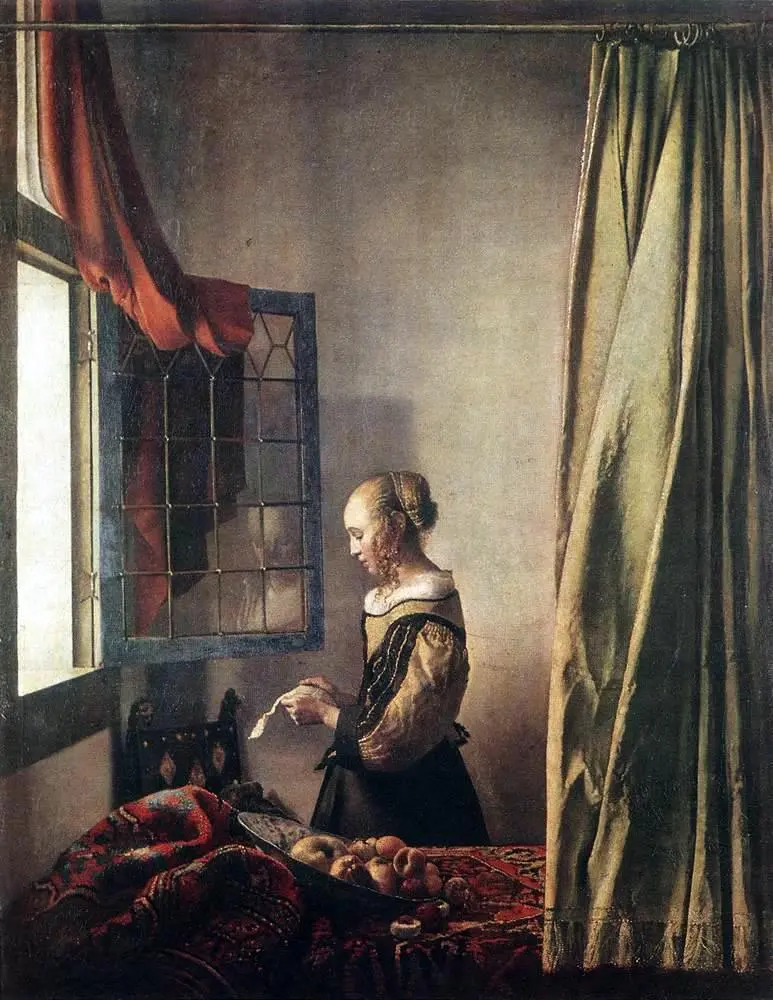
The morning post came at the usual hour, through the slot in the front door, and Adam did not get up for it. He had been at his desk since before dawn — he kept the hours of a man who had long ago stopped negotiating with his own body — and the small avalanche on the mat could wait until he wanted coffee.
He had lived in this house seventeen years and could not have told you the name of the man who brought the mail, or the milk, or who did the laundry or removed the trash, or their faces, or even whether it was the same men week to week. People who delivered things were a category, not individuals; his attention went where he sent it, and he had never once thought to send it there. So the figure who posted the envelopes through the slot that morning came and went the way weather comes and goes, and left about as much trace. (Both women who had nearly married him had said some version of the same thing: you are entirely present in your mind, and not quite present anywhere else. He had not disputed it then. He was, he supposed, not disputing it now.)
The summer heat had broken in thunder at the start of the month and left a muggy shadow behind; the brick held it all night and gave it back in the twilight. Adam sat in his shorts and shirtsleeves with the cuffs turned back, the long frame folded down over the page — spine arched, shoulders up, the whole skeleton arranged in a series of angles and curves — and the sweat came up on him under the green lamp, before there was any sun to blame it on. The lamp put what light there was on the crown of his head, where the grey had gone thin, and two long hands, and between them the page.
Why is a cart-wheel round?
He traced his own cramped notes in the margin. Underneath, in another pen:
Not wheels in general — THIS ONE, underlined twice.
He sat back in his chair, and closed his eyes. This one, he thought. The bulky hub, the stout spokes, the solid rim. The thing itself, standing in a lane. Easy: it’s round because the spokes are the same length, and the wheelwright made it round because otherwise he wouldn’t get paid. Adam chuckled.
He let that stand a moment, then watched with a frown as his imaginary cart rolled down the street and hit a hard bump: one spoke sunk half an inch deeper into the hub, and the rim came in at that point like a dent. The spokes were still equal in length. But it was no longer a round wheel. If he wanted the wheel to stay round, the spokes couldn’t move. In his mind he shrunk the hub to a single, dimensionless point that the spokes then attach to: a single, even more imaginary point that could never exist in reality, and yet he needed it, because you need a single, dimensionless point to make the wheel a circle, which is what roundness is. He had gotten here before.
Then further down the page, in the ink of a fountain pen he had lost many years ago, one word: No.
He could not remember what he had meant by it.
Adam gathered the mail when the kettle went on. Two bills, a journal he no longer read and could not bring himself to cancel, the parish bulletin — and one envelope that did not belong. Plain. Address typed. Postage ordinary. No return. But thick — like a folded paper.
He turned it over twice, the way you check a coin you suspect. “I wasn’t expecting anything,” he said to the kitchen, which did not answer. “I don’t like receiving things I’m not expecting. Give an old man his habits.” He set it with the bills on the table.
Adam stood at the kitchen window with his coffee and looked out over the untilled field. The sun was well up by now but still low and off to his left, so the schoolhouse on the far side had its shadow laid out across the grass toward him. It ran long and blunt at the end where the roofline fell. Adam tried to catch the shadow moving across a fencepost. The sun did not oblige; he kept his own time and would not be rushed. Adam leafed through the parish bulletin in the silence of the morning, still standing at the counter with his mug. In a day or two school would be in session and the stillness would be gone.
When he had finished his coffee, Adam made his way upstairs to the bathroom. He let the cool water run until it was good and hot, then shaved at the basin more by feel than by sight. Then the bedroom: the trousers, the shirt, the collar, the waistcoat buttoned from the bottom up. He wound the watch and put it in the waistcoat pocket. He combed what there was to comb. He examined himself in the mirror: “Good enough,” he thought.
On his way out the door he put the bills in his pocket, and took the journal to the study where it belonged. When he reached for his jacket, he suddenly remembered both the heat and the hole; instead of putting it on, he draped it over his arm and headed down to High Street.
He went out by the side gate, down the field-path, crossed the bridge, then turned left along the water instead of going up into the town. He liked the quiet of the riverbank. The bustle of High Street in the morning was sometimes more than he could bear. Besides, he told himself: this is where the story is. Yards and walls and a stack of crates gone soft in the wet; a cellar door propped open with a brick; water running out of a pipe he could not see; the wireless going in an upstairs room; the smell of somebody’s frying arriving and leaving again as he passed beneath it. Somebody yelling something to someone. Somebody yelling back.
Then the turn at the bottom, and the climb. The street had people in it, just as he had suspected it would. A familiar man in an apron said good morning to him at the corner by the ironmonger’s; Adam said good morning back. The man noted the unusualness of the heat, and Adam responded with thankfulness that it appeared to be dissipating. He walked on. Both men seemed satisfied with the exchange.
Adam ducked quickly into the tailor’s, before he was accosted again, and laid his coat on the counter.
The tailor picked it up, turning it round in his hands, then ran his arm into the sleeve, poking his finger through the elbow, and looked up at Adam with a smile.
Adam nodded.
The tailor pressed the cloth between his thumb and forefinger. “Weave is still good. Only the elbows. Same as before?”
Adam nodded.
“Give me two days.”
Adam thanked the man and left.
He came level with the turning that went down to the pottery shop, and briefly stopped. It was a lane or two off the parade, easy to miss altogether if you did not know it was there.
He had been down it only a few times since it opened, and every one of those had come with a reason attached — a gift wanted, a bowl to replace, an errand assembled beforehand and carried down with him like a ticket. He had nothing of the kind this morning. No occasion; nobody to give a thing to; a house with more plates in it than it had ever had use for, most of them in a cupboard he opened twice a year. He continued on up the hill. Two more stops; two bills paid; then home the way he had come.
When he got home he saw that the pile on the corner of the kitchen table had become one envelope on a bare table — which is a great deal more conspicuous than three. He moved it to the kitchen counter on the grounds that the table was for eating at. Then he set the parish bulletin on top of it, and then took the parish bulletin off again. He told himself he was being silly.
Two days later school was back in session.
He heard it before he had thought about it — the yard at the morning break, thirty or forty of them going at once. It came in at the open study window and stopped his hand where it was. He got up and shut the window and sat down again, and the room was close for the rest of the morning.
Later he went down and collected the coat on his weekly grocery run. The butcher and the grocer were discussing some political event as always; Adam steered clear, paid for his items, and left.
He had a view, as it happened. He believed it to be a rather good one, and could have set it down in front of the pair of them in four sentences and left them nothing to pick up with. He did not. He instead said that it looked like more heat coming, and went out with his items.
When he got back home, the envelope stared at him while he put his groceries in the cupboards. Adam moved it to an end table in the sitting room. “I will read it at my leisure,” he told himself.
Saturday found him at the booksellers. The man behind the counter was already reaching underneath it when Adam came in. He brought up a novel and set it on the wood between them.
“It’s good,” he said, in his thick foreign accent.
Adam waited for the rest of it. There was no rest of it.
He turned the thing over. Another Russian, recently translated, and some length to it.
“He won’t get out of bed?” Adam asked, reading the back cover.
“Correct,” said the bookseller. He declined to elaborate.
“I’ll take it,” Adam said, and the bookseller nodded. “I know,” he replied.
Adam did not go straight home. Saturday evening was the French place at the top of the street, and he’d had a standing reservation there for as long as he could remember. The whole Town called it La Gor-zhay with tremendous confidence. Adam had never corrected the pronunciation or commented on the name — he liked the cooking too well to risk it.
Nobody in the place spoke a lick of English. Not the boy at the door, not the waiter, not whoever it was behind the kitchen doors sending the plates out. Nobody had ever explained this and Adam no longer found it worth remarking on. He ordered in French, which was the seminary’s French and perfectly adequate, and the waiter answered him in French and did not slow down for him, which was the compliment. It was, when he thought about it at all, the only room in the Town in which he was entirely at his ease; and it did not once occur to him that this might have something to do with the fact that no one in it could ask him a question he did not already know the answer to.
He ate alone at the small table by the second window, as he did every week. He had the parcel with him and did not open it, though he took the string off and put the string in his pocket.
He came back up the hill in the dark.
When Adam got home, he did not take the book to the study. He took it through to the sitting room and put the lamp on and pulled the cover off one of the armchairs, and sat down in the smell of cold ash, and read about a man who would not get out of bed.
The envelope was on the end table at his elbow, doing nothing.
After an hour Adam put the book face-down on the arm of the chair and carried the envelope out to the hall and put it in the drawer of the hall table and shut the drawer harder than he’d intended to. Then he came back and sat down and read on. “No unnecessary distractions,” he told himself.
On Sunday a shiver went through his body every time he walked down the hall, and his eyes darted to the drawer. He eventually took it out of the drawer and set it on top. Twice he picked it up. The first time he got as far as the flap. The second time he did not know he had picked it up until he found that he was holding it.
He was not, he told himself and the hallway, a man who opened things that came without a name on them. A person’s attention is finite, the world is full of people who would like some of it, and he had spent a good deal of his life learning how to decline. All of that was true. The envelope stayed where it was.
That night he woke in the small hours and lay with his hands folded, thinking of nothing in particular, and in that nothing sat a typed address with nobody behind it. In the end he got up and went down. He did not put the light on. He stood at the foot of the stairs until his eyes came round to the dark, and it was right where he had left it, a paler rectangle on a dark table, and he went back up without touching it.
On the eighth morning he gave in. “Alright! Enough already.” He snatched it up, half in anger, slit it with his thumb, and stood reading in the hallway, his weight on one hip, fully prepared to be unimpressed and back to his coffee inside the minute.
A page in, he saw what it was trying to do, and he guffawed — a short, surprised bark in the empty hallway. Someone had taken a rigged Hilbert space — his space, the one he had worked inside for fifty years — and was using it, with a perfectly straight face, to march toward precisely the kind of question he had spent a career refusing to let physics pretend it could touch. The cheek of it. He read on, grinning now. “Ok,” he said. “This must be a prank. One of my former students.” It had to be: too well-made for a crank, too presumptuous to be in earnest, and built by someone who knew exactly which of his buttons to lean on. Somebody had gone to real trouble to get a rise out of an old man.
It would get one — though not the kind they were after. He carried the pages down the hall to the study — the long room at the back where the serious reading was done, functional analysis shelved into Aquinas, the Gelfand–Vilenkin volumes within reach of the chair — not to find out whether it was true (it was not; he knew that the way he knew his own hand) but to find the hole. There is always a hole. A thing that reaches this far has torn somewhere, and he meant to find the tear, name it exactly, and — the part he was almost looking forward to — read the cut of the mistake backward to the student who had made it.
He sat down and took up the red pencil, the way he had sat down for his entire academic career: to grade a freshman paper written by someone who didn’t quite understand what they were reaching for.
Chapters Chapter A1 → · Braided Paper A0 →