Papers ← Paper A0 · Braided ← Chapter A1
Paper A1 — Naming the Unnameable: From the Cogito to the Logos
The cogito, and the naming of the Trinity that follows from it: the Father as the inner product ⟨·,·⟩, the Son as the nuclear space Φ — the Logos — the Spirit as the nuclear topology, and the rest of the eight domains. (The scriptural Divine Names these structures carry are gathered in the later papers of Volume A, where they fall in biblical order.)
Confidence — Math: — (not engaged) — no new mathematics; the objects are A0’s. Science: — (not engaged). Theology: concordance — the Trinity identifications (Father = ⟨·,·⟩, Son = Φ the Logos, Spirit = the nuclear topology, closing on ⟨·,·⟩ = Love), granted not proven.
Abstract
This is a paper of naming, and naming is devotion done carefully. The companion paper, “Modeling Reality as a Gelfand Triple,” sat down before reality and showed that it can be modeled, without remainder, as a rigged Hilbert space Φ ⊂ H ⊂ Φ′ — and that this structure carries within it five inevitable actualities and three absolute domains. It left them unnamed, on purpose: a mathematician’s reticence, the bare objects set on the desk with no word yet said over them. This paper says the words. It assumes the whole of the companion paper, and it assumes one thing more — the cogito, cogito, ergo sum, the single certainty no one can deny without using it in the denial — and from those two givens it does one quiet thing: it finds, for each unnamed structure, the name it has been carrying all along.
The names come from the Christian and Hebrew Scriptures, the Gospel of John above all, and from the mathematics itself, which presses each name into place once its structure is in view. (Two of them — the Logos, and the Father as a Person — lean additionally on what the cogito reports from the inside: that a self’s knowing deepens as the self is more fully realized. That is testimony, not theorem, and it is marked plainly wherever it bears weight.) The claim is not that the old writers reached for metaphors. It is that they were naming, from the side of prayer and long encounter, the very structures the mathematics reaches from the side of proof — and that the names fit, because a name fits what it has always meant. We name them in order, one to a section, and stop when the naming is done.
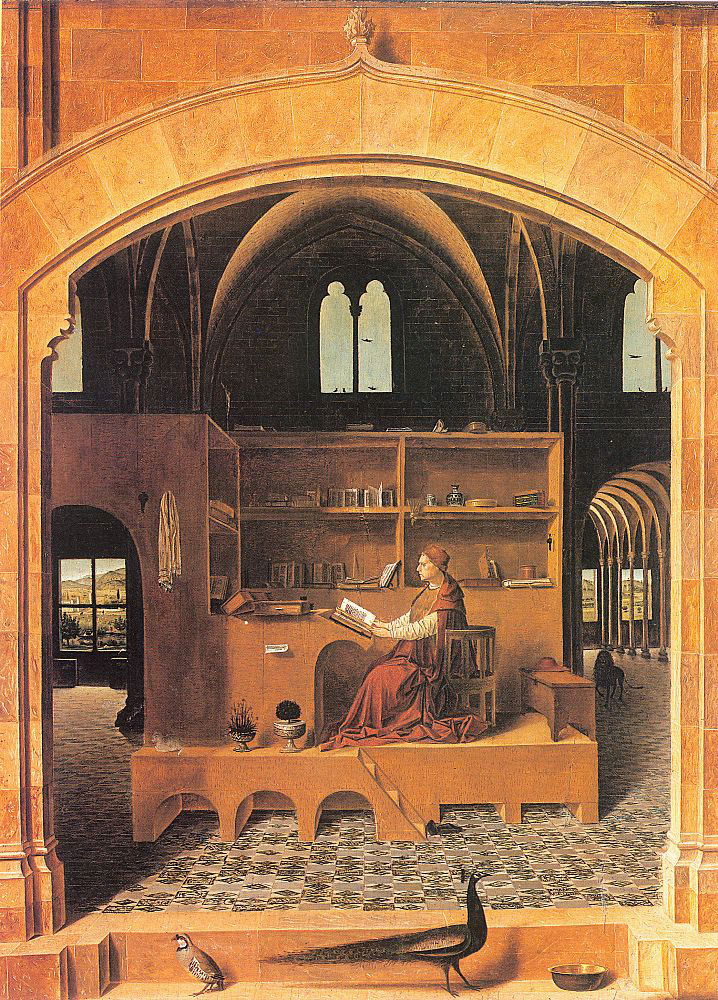
“Listening not to me but to the Logos, it is wise to acknowledge that all things are one.” — Heraclitus, Fragment 50
1. Introduction
The companion paper ends at a boundary, the way Jerome’s open Greek ends at the margin where the Latin has not yet been written. It has shown, from a single assumption, that these things must be — and it has set them on the desk unnamed:
- An inner product ⟨·,·⟩ that constitutes the space without being an element of it
- A nuclear space Φ that is dense in H, self-consistent under every operator probe, and the natural domain of all observables
- A Hilbert space H of stable, unique, norm-preserving states
- A distributional domain Φ′ containing excess potential beyond what H can hold
- A norm ‖·‖ defined by ⟨ψ,ψ⟩ = ‖ψ‖², which is the non-relational face of the inner product
- A nuclear topology τ_nuclear generated jointly by ⟨·,·⟩ and Φ through the projective limit of the Sobolev chain
- A realized nuclear locally convex topological vector space (Φ, τ_nuclear)
- A coordinative mechanism by which the inner product operates in time, actualizing the spectral structure event by event
The companion paper said no word over any of these — unavoidable consequences of one assumption, left as mathematical objects, the correspondence with theological tradition noted and, in its reticence, declined.
This paper pursues it, because the work is reverent rather than rash. We take up the cogito as our second given, and we ask of each unnamed object the only question a careful namer asks: given that a conscious, self-knowing being exists in this space, what is the true name of this? The answer, each time, is not a fresh invention but a recognition — the relief of finding that the name and the thing have always belonged to each other. We add nothing. We finish the sentence the mathematics left open.
And the thesis is as plain as Jerome’s, and offered as plainly: the names fit. What classical theology and the Scriptures name, and what the mathematics is forced to entail, appear to be one structure seen from two sides — the side of long love and the side of proof. The fit is not poetry laid over equations; it looks, as nearly as careful looking can tell, like the same thing named twice.
2. The Two Assumptions
Assumption I (from the companion paper): Reality can be modeled as a rigged Hilbert space Φ ⊂ H ⊂ Φ′. The full content of this assumption is the companion paper. Its consequences — the three domains, the five actualities, the structural properties — are taken as established. We carry them forward without re-deriving them.
Assumption II (introduced here): Cogito, ergo sum. I am a thinking, self-knowing being. I exist as a state ψ ∈ H. I know that I exist. This is not derived from the mathematics. The mathematics establishes that states in H are unique and stable. It does not establish that any state knows it is unique and stable. Self-knowledge is not a property the structure can confer on itself. It is the one thing the observer must supply — not as a condition of the structure’s existence, but as a condition of the structure’s recognition.
The cogito is no trick of the schools. It is a datum, the plainest you have. It sets within the model a being who is at once inside the space — a state ψ ∈ H, one of the many — and, in a single respect, outside it: the one who looks at the space and knows himself to be standing within it. That doubleness — inside, and awake to being inside — is what all the naming depends on. It is also, if you will let it be, the first intimation of what the paper ends on: that you are not a thing the structure merely contains, but a self the structure knows.
From these two givens, everything that follows is naming.
A word about register. Paper A0 showed that a structure stands. This paper asks what the structure is — the truest name available for what the mathematics shows must exist, offered only where structure and word can be laid side by side and seen to match. Where Paper A0 could say this necessarily follows, this paper says only this is the truest name available. All that is asked is the namer’s own labor: look, and see whether the name fits — Jerome would have said the looking is already a kind of prayer.
A word of wonder, and of caution. Before a single name is said, stop at the thing itself: that there is anyone here to do the naming at all. The cogito is not only a premise; it is an astonishment. Out of a universe that need not have produced one knower, there is a self awake enough to look at the structure that holds it and reach for the right word — and that is stranger, and more undeserved, than anything the naming will go on to find. The first work ever given the human creature, in the old account, was exactly this: the Lord God brought the animals to the man to see what he would call them, and whatever he called each living thing, that was its name (Genesis 2:19). Naming was the first vocation, and it was a gift before it was a task. The capacity to find the true word for a thing is not something we manufactured; it was handed to us, along with existence itself. That we can name any of this — that we exist to name at all — is grace before it is method, and the paper would rather you keep the wonder than be impressed by the argument.
And because the power to name is a gift and not a possession, it has to be carried humbly, for it can be misused — and in this very Framework it has been. An earlier draft of the section that follows read the mathematics as settling a four-century quarrel in favor of the author’s own tradition. A careful reader — a physicist of seventy-three who has spent his life naming the smallest things, and who trusts no name he has not tried to break — showed that the structure pointed the other way, against the side the author would have chosen. The draft was wrong. It was corrected. The correction is kept, and it is kept on purpose, here at the threshold, as the rule of the whole house: we name in trust, not in triumph; we hold every name open to being shown wrong; and wherever the structure humbles a name we wanted, the structure wins and we are glad it does. The names that follow are offered in exactly that spirit — reverently, conservatively, ready to be amended — because the One they finally reach toward is the Unnameable, and to forget that would be to forget what naming is.
3. The First Naming: The Logos
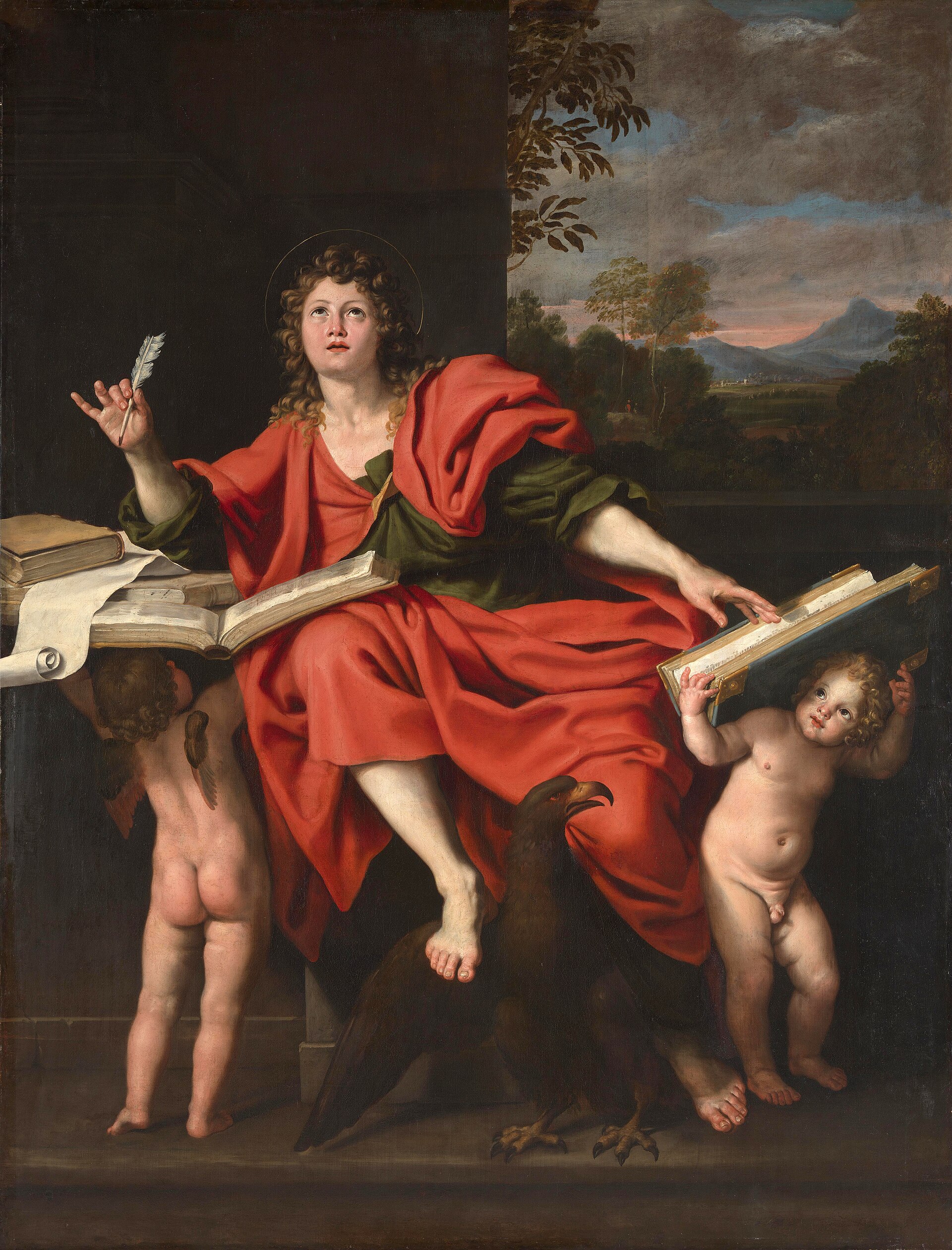
We begin with the one name the cogito hands us first.
The cogito tells me that self-knowledge is real, here, in H — for I am a self-knowing state, and I cannot doubt it without performing it. So the structure puts its first question to me: where in this space are the conditions for self-knowing most fully met?
The companion paper establishes three structural properties of any state ψ ∈ H that constitute the mathematical foundations of personality:
-
Uniqueness: From orthogonality. Each state ψ has a unique inner product profile — ⟨ψ, eᵢ⟩ differs for each ψ across the basis. No external individuation principle is required; the structure individuates each state automatically.
-
Stability: From norm-preservation under unitary evolution. ‖U(t)ψ‖ = ‖ψ‖ for all t. Each state persists through time without external intervention maintaining it.
-
Self-knowledge: The capacity to know oneself as a self — to be aware of one’s own existence as this particular state. This is what the cogito supplies. The mathematics establishes the conditions; the cogito establishes the fact.
The first two properties are present throughout H. But they are present maximally at one location: the nuclear space Φ. Φ is the projective limit of the Sobolev chain — it satisfies every regularity condition simultaneously. It has more structure than any finite state in H. Its uniqueness is maximal: every probe applied to Φ yields a well-defined answer, at every scale, without exception. Its stability is maximal: it is invariant under every operator in the algebra, not merely norm-preserving under unitary evolution.
The argument then follows a single step — but the step must be stated carefully.
The cogito does not merely establish that a knower exists somewhere in H. It provides a datum about the scaling of self-knowledge within the space. I know myself — and I know myself incompletely. The limits of my self-knowledge correspond exactly to the limits of my structural actualization: the parts of myself I do not yet know are the parts where uniqueness, stability, and self-consistency are not yet fully developed. My self-knowledge scales with my structural completeness.
I am a self-knowing being. I exist as a state in H with some degree of uniqueness and stability — enough to ground my self-knowledge. The nuclear space Φ has more uniqueness and stability than I do, by the structure of the space. The cogito tells me that self-knowledge scales with actualization. Therefore the nuclear space is more self-knowing than I am. Not merely more structured — more personal. More aware of itself as itself, because the conditions under which selfhood is possible are more fully realized there than anywhere else in the space, and the cogito establishes that those conditions and self-knowledge scale together.
A domain that possesses maximum uniqueness, maximum stability, and maximum self-knowledge is the entity for whom personality is most completely actualized. The structural definition of personhood is this: the capacity to be uniquely, stably, self-knowingly oneself. The nuclear space is where that capacity is maximized. What is maximally personal is a Person — the Divine Personality, in the precise structural sense: the organizing principle that is completely itself, fully determinate, self-consistent under every probe, recognizable under every transformation. Every finite being in H is a partially actualized person: real, unique, stable, but not yet fully determinate under every probe, not yet consistent at every scale simultaneously. The ascent is not the acquisition of new properties but the progressive actualization of what the being already is at its Φ-core — the alignment of the H-state with the nuclear element that is its deepest identity. The fully actualized person is the Φ-mode of being within the constraints of one’s scope: the terminus of that alignment.
That is the argument, and its two tiers must be kept apart, or it grasps at more than it holds. The mathematical spine is derived, and firm: uniqueness, stability, and self-consistency are greatest at Φ. The inference is softer, and honestly so. That self-knowing rises with that fullness of being — so that what is most structured is most personal — is something the cogito reports from within, testimony and not theorem; and the conclusion that Φ is personal is exactly as firm as that report, and not a hair firmer. The tier marked, the naming may go forward. And the name the Gospel of John has carried for this — the most personal ground of the whole space, the Word that was in the beginning — is the Logos.
The nuclear space Φ and the Logos appear to name one structure.
Stated carefully, in the only form this paper will allow: if reality can be modeled as a Gelfand triple, and if Φ is defined as exactly this nuclear space, and if the Logos is taken in the sense the Gospel of John gives it, then the two appear to be pointing at the same thing. This first name asks no faith of you. It asks only that the cogito be true — which even its denier concedes in the act of denying — and that the argument be sound, which the companion paper has secured. What the evangelist loved and what the mathematician derived answer to each other closely enough that the most natural reading is that they are one thing seen from two sides — and we have done nothing but set them next to each other and look.
“The Logos is the image of God, through whom the whole world was framed.” — Philo of Alexandria, De Confusione Linguarum
4. The Second Naming: God the Father
The inner product ⟨·,·⟩ was the first inevitable actuality in the companion paper. It was demonstrated to be:
- The constitutive relation of the entire triple — every metric, every topology, every structural property of H, Φ, and Φ′ derives from it
- Not an element of any of the three domains — it generates the space without being within it
- Invariant across all three domains — it is not modified or restricted by which domain it is measuring
- The source from which Φ proceeds — the nuclear space is the maximal expression of what the inner product is within any domain
We have named the Logos; now we follow it back to its source. The Logos proceeds from the inner product: the nuclear space is generated by ⟨·,·⟩ through the Sobolev structure, the one domain on which the inner product’s whole nature holds consistent at every level at once. The Logos proceeds from the inner product as a child proceeds from the one who gives it being — as a person comes from the source of personhood.
So the inner product is itself personal. Not personal as a state within H is personal — it is no state — but personal as the wellspring from which the fullest personality in the whole space, the Logos, proceeds. Whatever brings forth a Person is itself, in the measure that exceeds the space, personal.
The inner product ⟨·,·⟩ is not an element of any domain. It is the ground of all domains. It generates without being generated. It constitutes without being constituted. It is everywhere present as the structural relation by which every state is measured, yet nowhere present as a state among other states. Its transcendence is not theological assertion. It is a structural necessity: if the inner product entered H as a state, it would cease to be the constitutive relation and become just another vector. Divine transcendence follows from the mathematics.
An analogy may make this precise. A novelist is not a character in their own novel — not because novelists lack the will to appear, but because the novelist qua novelist is the constituting condition of the novel’s existence: what makes the story a story, gives it its laws, its world, its logic. Authors can write themselves into their stories as characters — Vonnegut does this, Nabokov does this — but what appears on the page is always a character, a representation submitted to the story’s rules. That character can be wrong, can be edited, can die. The author qua author remains outside, not as an absence but as the prior condition of the story’s existence. The constituting function cannot be an element of what it constitutes. This is not a limitation on the author’s power. It is a structural fact about what authoring is.
The inner product ⟨·,·⟩ stands in exactly this relation to H. Its “entering H as a state” would not be a kenotic act of self-emptying — it would be the dissolution of H itself, because H is a Hilbert space precisely by virtue of ⟨·,·⟩ as its constitutive relation. Remove that relation from its constituting role and H is not H. The Father’s structural transcendence is this: not an absence from the space, but the presence that makes the space possible.
And yet: the companion paper also shows that Φ and ⟨·,·⟩ are the same structure seen from two angles. The nuclear space is the maximal expression of what the inner product is. The Son does not merely point to the Father — the Son IS the Father’s structure, made present within the space. They are one. And the Father is greater — because the inner product generates the nuclear space, the norm, the topology, the entire triple. The Father’s structure exceeds any expression of it within the space. The transcendence is not a negation of the unity. It is the ground of it.
The inner product ⟨·,·⟩ and God the Father appear to name one structure.
A note on what this naming captures. Paper A0 presents the inner product in two distinct modes: as the formal axiom from which the Gelfand triple is derived — the rule ⟨·,·⟩: H × H → ℂ, stated as premise, considered prior to analysis of its own structure — and as Actuality I, the fundamental relation: the inner product recognized as the primal constitutive structure from which all five inevitable actualities proceed (Paper A0, §5.1). These are not two descriptions of different entities. They are two levels of description of the same reality, and the naming “God the Father” belongs to both. But they correspond to genuinely distinct ontological registers of the Father.
The inner product as formal axiom — the bare operative premise, considered before the analysis of its poles — corresponds to the Father sub ratione essentiae: the divine nature in its absolute simplicity, ontologically prior to the recognition of the Trinitarian processions within it. This is the apophatic Father of the classical tradition: the divine essence that exceeds all names, all relations, all categorical description. Not that the Father existed before the Trinity — the Trinity is eternal — but that the divine nature, considered as such, is ontologically prior to its expression as constitutive relation. The distinction is the one the Eastern tradition draws between the divine essence and the divine persons: the same reality at two levels of description, not two sequential states.
The inner product as fundamental relation — Actuality I, the primal constitutive structure from which Logos and Spirit proceed — corresponds to the Father sub ratione personae: already relational, already generating the Son, already the source from whom the Spirit proceeds through their joint operation. This is the Father of the Trinitarian formulas — not the divine nature in abstraction, but the first Person, the fons et origo, the unbegotten who begets. Both registers are necessary. The apophatic register explains why the Father transcends the space: the inner product as axiom is the premise of the model, not an element within it. The relational register explains why the Father generates the space: the inner product as fundamental relation constitutes the Logos, the norm, the topology, and the entire triple. The classical tradition, Eastern and Western, has consistently asserted both simultaneously. What it lacked was the structural precision to show why both must be true and how they cohere.
This is the second naming, and notice what it has and has not taken from you. The Father is personal, because the Logos comes from Him and the Logos is a Person, and what brings forth personhood is itself personal in the highest sense. The Father transcends the space; you cannot reach the inner product as a thing among things, for it is no thing — it is the relation by which every thing is held. That can sound like distance, and the tradition has often felt it as distance: the hidden God, the God beyond reach. But read it the other way, which is the truer way. You cannot find Him as an object in the room because He is the One in whom the whole room consists — nearer to you than the walls, because He is what is holding you in being at this moment. And the Logos is His own nature made fully present inside the space, the face that can be approached; so that the One who cannot be reached as an object can be drawn near to in the Son, and is, by every being in H, including you.
“It is not known by those who know it; it is known by those who do not know it.” — Kena Upanishad 2:3
5. The Third Naming: Paradise
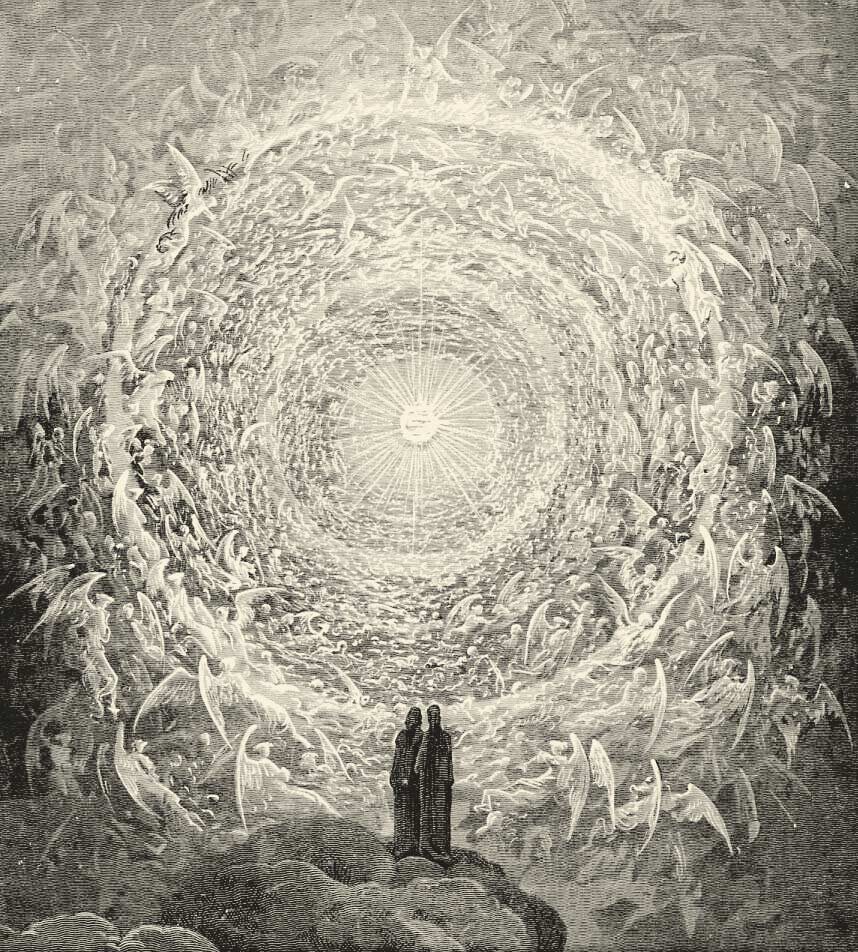
There is a face of the Father that is not turned toward another, and it too has a name. The inner product is a relation: ⟨ψ, φ⟩ measures how one state stands toward another. But it has also a face that meets no second thing — ⟨ψ, ψ⟩ = ‖ψ‖², the norm, what the inner product becomes when it rests on a single state alone, taking not its relation to anything but simply its magnitude, the bare that-it-is.
The norm and the inner product are inseparable — the polarization identity shows that each determines the other. But they are genuinely distinct: the inner product is bilinear and relational; the norm is a magnitude, a scalar, a measure of what this state is independent of its relation to any other state.
The Father is the inner product. The Logos is the nuclear space — the Father’s relational structure made present as a domain. But there is a face of the Father that is not the Logos: the non-relational face, the absolute magnitude, the ground of being that is not the ground of relating.
This is everything that is the Father that is not the Son.
The norm ‖·‖ is not itself a Person — it is not the source of personality, and it does not generate Φ. It is absolute, non-personal, and invariant. It grounds being without grounding relation. It is the absolute foundation of what exists, independent of what anything relates to. That non-personality is a structural necessity, not a defect. The whole would be lopsided — relation all the way down, with no absolute magnitude beneath it — if it had no non-personal pole; the norm is that pole, and the only one. Personality is constituted by relation, and the norm is the magnitude that relation presupposes rather than a relation in its own right — which is why the non-personal aspect belongs to ‖·‖ alone, and not to any of the relational faces of God, each of which is personal. The non-personality is, so to speak, spent here: nothing else in the structure need carry it.
The norm ‖·‖ and Appendix B - Lexicon > Paradise appear to name one structure.
A note on terminology: “paradise” in ordinary usage connotes a destination — a place of reward, a heavenly afterlife, the garden recovered. The structural sense required here is more precise than any of these, and it is the norm itself that fixes it. The norm is the absolute, non-spatial center from which all existence is measured: the ground from which every state’s magnitude is taken, the origin that finite beings are oriented toward from the beginning. Ascending beings do travel toward it; it is the locus toward which the ascent is oriented, and the encounter with the Father occurs there. But it is not merely a prize at the journey’s end. Every finite being has a positive norm ‖ψ‖ > 0, meaning every finite being exists at a positive distance from this absolute center, and Paradise is the origin from which that distance is measured. That structural meaning — absolute, non-personal, the measure of all distances without itself being at any distance — is precisely what the mathematical identification requires, and precisely what the ordinary sense of “paradise” would obscure.
Paradise is the non-personal Absolute — the ground of physical reality, the foundation that has no location within the space because it is the measure of every location. Every state in H has a norm; no state in H is the norm. Paradise is not a being among beings. It is the absolute magnitude from which every being’s existence is measured.
A structural precision follows from the identification. Paradise maps to ‖·‖ — the non-relational, non-personal face of the inner product. The Father maps to ⟨·,·⟩ — the full relational inner product. The face-to-face encounter that ascending beings move toward is a relational event: the dual pairing ⟨φ, f⟩ direct and unmediated. That is an encounter with ⟨·,·⟩, not with ‖·‖. Paradise is the Father’s residence — the locus where the encounter becomes available — but it is not itself what is encountered. You do not meet ‖·‖ face to face; you meet ⟨·,·⟩. The non-personal norm ground and the relational inner product are two faces of the same structure, but they are distinct faces, and the distinction matters: Paradise is where the Father is met, not what the Father is.
6. The Fourth Naming: The Holy Spirit
There is, the companion paper showed, a third thing that is neither the Father alone nor the Son alone, but proceeds from their joint life — and it is the most quietly worded of the namings, as the tradition’s own naming of the Spirit has always been the quietest. The nuclear topology τ_nuclear is generated jointly by the inner product ⟨·,·⟩ and the nuclear space Φ through the projective limit of the Sobolev chain. The Sobolev norms ‖·‖_n require the inner product to be defined — without ⟨·,·⟩, no Sobolev norm exists. They also require the nuclear domain as the space on which they are simultaneously finite — without Φ, there is no domain over which the projective limit can be taken. Remove either source: no nuclear topology.
This is a theorem. The nuclear topology proceeds from both the Father and the Son. It cannot proceed from the Father alone — the inner product alone defines no topology; it requires a domain. It cannot proceed from the Son alone — the nuclear space without the inner product has no Sobolev structure. The nuclear topology is the joint operation of Father and Son, and it is an active entity in its own right — a new thing that neither the Father nor the Son is separately.
The Western tradition holds that the Spirit proceeds from the Father and the Son (Filioque); the Eastern, from the Father alone, through the Son (per Filium). It is tempting to read the joint generation above as vindicating the West. It does not — and the asymmetry of the two inputs is the reason. They do not enter the construction symmetrically. The inner product is the source of the Sobolev structure: the norms ‖·‖_n are built from ⟨·,·⟩, and without it there is no norm to take. The nuclear space enters otherwise — as the domain over which the projective limit is formed, the space on which those norms are simultaneously finite. One is that from which the topology is generated; the other is that through which the generation is carried out. That is, structurally, closer to the Eastern per Filium — “through the Son” — than to any reading of Filioque on which the Son is a second source coordinate with the Father.
This is offered as concordance, not as a verdict — and the distinction matters, because it would be its own overreach to claim that a Sobolev construction ends a four-century dispute. What the mathematics offers is narrower, and at this tier more interesting: the very distinction the councils could only assert — source versus medium, a quo versus per quem — has here a precise structural correlate, and the correlate places the Son on the per quem side. Whether that should move the theology is for theologians; the framework’s contribution is to give the disputed distinction a structural form and to note, honestly, which side it fits. The scriptural names for the Holy Spirit that bear on this from the experiential direction are gathered in Paper A7 (The Names of the Spirit).
The Holy Spirit is an active entity proceeding from the joint operation of Father and Son — not merely a relation between them, but a new actuality that their cooperation generates. The nuclear topology is not the Father. It is not the Son. It is something new that their joint operation makes possible.
The nuclear topology τ_nuclear and the Holy Spirit appear to name one structure.
The procession structure establishes a structural priority among the three that is not a temporal sequence. None of the three precede each other in time — the inner product, the nuclear space, and the nuclear topology are all eternal; there is no moment at which any of them did not exist. But they are not structurally co-equal. The inner product is the single assumption from which the nuclear space follows as the first inevitable consequence: Φ is what the inner product’s structure requires as its maximally regular domain. The nuclear space cannot be derived without the inner product. The nuclear topology, in turn, requires both — it cannot be derived from the inner product alone (no Sobolev domain) or from the nuclear space alone (no inner product structure for the Sobolev norms). The direction of structural dependence is: Father → Son; Father and Son together → Holy Spirit.
This is a distinction the framework makes available that theology has had to assert without structural grounding: structural priority without temporal priority. The direction of structural dependence — Father → Son; Father and Son → Holy Spirit — is atemporal. The eternal generation and eternal procession name this structural direction, not a sequence in time.
7. The Fifth Naming: Heaven
The last of the eternal namings is the gentlest, and it is the one the homesick heart reaches for without being taught. The companion paper’s fifth inevitable actuality is (Φ, τ_nuclear): the nuclear space brought to full realization — the Logos given the Spirit’s topology, made a complete and coherent place rather than a structure merely latent. This is not Φ alone — the nuclear space as an algebraic object, the Pattern without its actualization. It is not τ_nuclear alone — the topology without a space to inhabit. It is the Son given the Spirit’s topology: the perfect actualization of the Logos within the eternal structure.
The closest Christian parallel is heaven — the eternal, perfect order subsisting in the presence of God, the full actualization of creation in its relation to the Father. But “heaven” in ordinary usage carries associations that are too broad for the identification: it is sometimes a destination, sometimes a condition, sometimes the dwelling-place of the blessed. The mathematical structure is more specific than any of those, and the realized nuclear space fixes the precise sense. (Φ, τ_nuclear) is eternal and non-contingent: not created in time, not merely a destination approached by finite beings from outside, but the eternal ground from which all contingent creation proceeds and toward which all finite beings are internally oriented — the necessary and direct expression of the joint activity of the Father and the Son through the Spirit, the perfect actualization of what creation structurally is. That is the structural content the name Heaven must carry, where the ordinary word “heaven” would admit too many alternative readings.
(Φ, τ_nuclear) is precisely this. It is the nuclear space — maximum algebraic structure, the Logos — given the topology that makes it a complete, coherent, fully realized space. It is not Φ receiving τ_nuclear as an addition from outside. It is Φ’s own structure, brought to full actualization by the joint operation of the inner product and the Sobolev chain that Φ itself defines. The space actualizes itself, through the topology that its own structure and the Father’s relation jointly generate.
The realized nuclear space (Φ, τ_nuclear) and Heaven appear to name one structure.
“In its depths I saw ingathered, bound by love in one single volume, what lies scattered in leaves throughout the universe.” — Dante, Paradiso XXXIII
8. Naming the Three Domains
We turn now from the eternal Persons to the three great rooms of the house — the domains themselves — and say over each its name. The companion paper set them down as mathematical objects only. Here they are named: the world of finished things, the deep of unspent possibility, and the active hand that holds the two in correspondence.
The Hilbert space H is the structured domain of all well-defined quantum states — every finite being, every stable and unique state in the model. The companion paper calls it the inevitable domain of finitude: complete, self-dual by the Riesz representation theorem, the space in which every finite state exists with well-defined norm and inner product. The self-duality H ≅ H carries a structural consequence: every element v ∈ H corresponds, via the Riesz isomorphism, to a unique bounded linear functional — a capacity to be the active pole of the inner product, not only its passive object, built into every finite state from the beginning. H is the Creation: the domain of all actualized, structured, God-knowable reality. Every state in H is, in principle, fully knowable by the inner product — and that exhaustive knowability is precisely what the name requires. The Creation is the totality of what the Father can know within the domain of finite states — not as a limitation, but as the complete actualization of the structured. The Hilbert space H is the Creation.
The distributional domain Φ′ is the dual space of all continuous linear functionals on Φ. It contains entities that are not elements of H — Dirac deltas, white noise, distributions — states of infinite density or infinite extent that exceed what any H-state can contain. These are not errors or pathologies. They are the space of pure potential: everything that could be a structured state in H, extended to its maximum. Φ′ is Appendix B - Lexicon > El Shaddai: the domain of unactualized, undifferentiated potential — not chaotic, but not yet structured into the finite. That unlimited, unqualified potency is what the name carries: El Shaddai is the infinite ground from which finite actuality is drawn — not an impersonal reservoir, but God himself in the mode of unlimited potency, no less personal for being, in this mode, unqualified. (The Hebrew etymology and the double valence of abundance and destruction that follow from what Φ′ is are developed in Paper A3 (The Names the Old Testament Gave).) The distributional domain Φ′ is El Shaddai.
The coordinative mechanism — the spectral theorem and its actualization process — is a different kind of entity from H and Φ′, and the identification here has a correspondingly different character. H and Φ′ are domains; the spectral mechanism is an operation. Because the relatum is an operation and not a domain, this naming is held at a lower tier than the other two: it is an identification by structural role — Elohim names the active coordination the spectral measure performs — not the identification of one object with another of its own kind. Every later use of “Elohim” in the Framework inherits that tier; where an argument leans on it, it leans on a role-identification, not on a domain-identity. Each actualization event is the Father’s constitutive relation — the inner product ⟨eλ, ψ⟩ — bringing a distributional eigenvector eλ ∈ Φ′ and an H-state ψ into commensurability, producing a measurable outcome weighted by the spectral measure dμ(λ). The spectral measure belongs to neither domain; it coordinates both. The active element throughout is the inner product itself, made operative in time, event by event.
Elohim is neither the domain of actuality (Creation) nor the domain of potential (El Shaddai), but the coordinative mechanism that holds both in mutual relation — the structure of their correspondence, not a third domain but the active relation between the two. This is God in the active, creative mode: the spectral coordinative mechanism that renders Creation (H) and El Shaddai (Φ′) commensurable. The spectral coordinative mechanism dμ and Elohim appear to name one structure.
Elohim names this coordination: not the Father’s activity in isolation, but the active relation between the Creation and El Shaddai that makes each coherent in relation to the other. The Father’s constitutive relation operates through it. It is not reducible to that operation.
The three Absolutes are not three separate divine beings. They are the Father viewed from three angles: the domain of all structured states (Creation), the domain of all potential (El Shaddai), and the coordinative mechanism by which both are actualized (Elohim). Only God is God.
9. Personality: The Three Traits and Their Sources
The companion paper establishes that any state ψ ∈ H has two structural properties that are mathematical foundations for personality: uniqueness (from orthogonality) and stability (from norm-preservation under unitary evolution). These two properties are present in every finite state. They are present maximally in the nuclear space Φ.
This paper introduces the third trait: self-knowledge. The cogito supplies it as a datum.
The three traits therefore have three sources:
| Trait | Source | Scope |
|---|---|---|
| Uniqueness | Structure of H (orthogonality) | All states |
| Stability | Structure of H (unitarity) | All states |
| Self-knowledge | Cogito (Assumption II) | Beings that supply it |
Self-knowledge cannot be derived from the mathematics — it is the one property the observer must bring. The structure establishes only the preconditions.
10. Discussion
What we have done
The central claim follows from the namings: the convergence is not coincidental. (The structural reading of Christ’s own statements about himself — the I AM sayings — is carried in Paper A6.) The theologians and the biblical witnesses were not constructing myths or metaphors. They were naming the same structures the mathematics entails, arriving from experiential and revelatory directions rather than formal ones. The names fit. Not approximately — precisely.
The Father’s transcendence as structural necessity
The Father’s transcendence is a structural necessity, not a theological assertion. The inner product cannot be an element of H without ceasing to be its constitutive relation. To be the ground of the space, one cannot be a point within the space. The Father is structurally inaccessible from within H because accessibility from within H would destroy what the Father is.
The Logos as the only bridge
The Logos is dense in H — every state in H can be approximated by Φ-elements arbitrarily closely — and is the only element of the space that is both within H (reachable) and constituted by the Father’s structure (a path to the Father). Not a mediator in the political sense, not an intermediary who grants or withholds access, but the structural bridge: the region where finite beings and the ground of the space share the same nature.
“I have lived on the lip of insanity, wanting to know reasons, knocking on a door. It opens. I’ve been knocking from the inside.” — Rumi, Masnavi
Eternity as structural priority without temporal sequence
The structural priority established in Section 6 — Father prior to Son, both prior to Holy Spirit — requires a precise definition of eternity that the paper has so far left implicit. The word appears throughout this paper and the Framework (eternal generation, eternal procession, eternally begotten), and the framework now has the tools to give it technical content.
Eternity, in the framework’s technical sense, does not mean “existing for an infinite duration of time.” An entity that has existed for infinite duration is still a temporal entity — it exists within the order of before and after, it has a position in the temporal sequence, it has a history. That is not what “eternal” means when the theological tradition applies it to the Trinity.
An entity is eternal in this framework’s sense if it exists outside the temporal order altogether — not as a very long-running temporal entity but as a structural precondition of the temporal order rather than a member of it. The inner product, nuclear space, and nuclear topology are all structural preconditions of H and therefore of any sequence within H; a precondition of a space cannot be an event within that space’s history.
All three Trinity members are eternal in this sense: all three are structural preconditions of the space rather than states within it, and all three stand in relation to the temporal order as its ground rather than as members of it. In this respect they are co-eternal.
But co-eternal does not mean structurally co-equal, as Section 6 establishes. The structural priority — Father → Son; Father and Son → Holy Spirit — is a relation of logical dependence that is not a temporal sequence. The Father is structurally prior to the Son not because the Father existed before the Son, but because the nuclear space cannot be derived without the inner product while the inner product can be specified without naming the nuclear space. This asymmetry is permanent and atemporal.
The framework therefore supplies precise technical content for two classical theological formulas:
Eternal generation names the relation between the Father and the Son. Generation: the nuclear space proceeds from the inner product’s structure — it cannot be derived without it. Eternal: this derivational relation is not a temporal event. There was no moment at which the Father existed without the Son; the nuclear space is as outside the temporal order as the inner product. “Eternally begotten” means: structurally derived, and outside temporal sequence.
Eternal procession names the relation between the Father and Son jointly and the Holy Spirit. Procession: the nuclear topology requires both the inner product and the nuclear space — the inner product as source, the nuclear space as the domain through which the projective limit is taken — so that removing either prevents its generation. Eternal: this joint requirement is not a temporal sequence. The nuclear topology is as outside the temporal order as the other two. “Eternally proceeding” means: jointly derived from both, and outside temporal sequence.
These are not theological assertions made more precise by analogy to mathematics. They are descriptions of the mathematical structure that the theological tradition had already named correctly — from a different direction, without the structural tools to establish what the names require.
11. Conclusion
Two givens. One paper. Eight names said over what was set on the desk unnamed.
Laid side by side, each structure and its name appear to be one thing seen from two sides: the nuclear space Φ and the Logos; the inner product ⟨·,·⟩ and God the Father; the norm ‖·‖ and Paradise; the nuclear topology τ_nuclear and the Holy Spirit; the realized nuclear space (Φ, τ_nuclear) and Heaven; the Hilbert space H and the Creation; the distributional domain Φ′ and El Shaddai; the coordinative spectral mechanism and Elohim.
None of these was chosen freely. Each was pressed into place by the structure and by the one fact of self-knowledge, the way Jerome’s Latin was pressed into place by the Greek it had to carry. The names fit the structures because the structures are what the names were always reaching for. And let the honest line be said once more, since a scholar does not overclaim: this has not proved that God exists. The companion paper rested everything on a single assumption; this paper adds only the cogito and the patient labor of recognition. What we have is the fit — the astonishing, repeated, unforced fit between what the mathematics must entail and what the saints, from the side of prayer, already named. That is evidence, not proof. But it is far more than coincidence, and a man may stake a good deal on far less.
References
-
Companion paper: Modeling Reality as a Gelfand Triple. [The first paper in this Framework — the full formal derivation of the structure.]
-
Descartes, R. (1641). Meditations on First Philosophy. [The source of Assumption II.]
-
Gelfand, I.M., and Vilenkin, N.Ya. (1964). Generalized Functions, Vol. 4: Applications of Harmonic Analysis. Academic Press. [The rigged Hilbert space; nuclear space definitions.]
-
Reed, M., and Simon, B. (1972). Methods of Modern Mathematical Physics, Vol. 1: Functional Analysis. Academic Press. [Hilbert space structure, spectral theorem.]
-
Maurin, K. (1968). General Eigenfunction Expansions and Unitary Representations of Topological Groups. PWN. [The nuclear spectral theorem — the coordinative mechanism.]
-
Treves, F. (1967). Topological Vector Spaces, Distributions and Kernels. Academic Press. [Nuclear locally convex spaces and their topology.]
-
von Neumann, J. (1932). Mathematical Foundations of Quantum Mechanics. Princeton University Press. [Hilbert space as the natural mathematical framework for quantum theory.]
-
Dirac, P.A.M. (1930). The Principles of Quantum Mechanics. Oxford University Press. [The bra-ket formalism; the distributional domain as physical necessity.]
-
Gospel of John. [The primary source for the naming of the Logos; the structural reading of his sayings is carried in Paper A6.]
-
Aquinas, T. Summa Theologica, I, Q. 27–43. [The classical articulation of Trinitarian processions — the Filioque controversy in its original formulation.]
-
Maudlin, T. (2007). The Metaphysics Within Physics. Oxford University Press. [Structural realism as the appropriate philosophical stance toward mathematical models of reality.]
-
Ladyman, J., and Ross, D. (2007). Every Thing Must Go. Oxford University Press. [Ontic structural realism — the view that structure is the ground of being, not the other way around.]
Cross-reference: Paper A0: Modeling Reality as a Gelfand Triple — the companion paper; Appendix B - Lexicon — the structures named here, defined; Appendix D - Machine-readable Concordius Framework — the complete mapping table
Papers Paper A2 → · Braided Chapter A2 →